Thinking about leaving Boston but want clarity on how Westwood stacks up against Dedham, Norwood, and Needham for yard size, house type, and commute? You are not alone. Each town’s zoning and rail access shape what you can buy and how you will live day to day. In this guide, you will see how lot-size rules and station locations translate into real housing choices, pricing tiers, and renovation potential so you can match a town to your goals. Let’s dive in.
Quick comparison: what sets each town apart
Westwood prioritizes larger single-family lots in many districts. The town’s residential dimensional table shows minimum lot areas such as 12,000, 20,000, and 40,000 square feet, with some estate districts up to 80,000 square feet, which produces a spread of medium to very large lots and mostly detached homes. That same table also sets setbacks and lot coverage, so additions and accessory structures must fit within those limits. You can review the details in Westwood’s official zoning bylaw dimensional table for context and next steps if you plan renovations (Westwood zoning table).
Norwood offers smaller-lot single-family neighborhoods and more two- and multi-family pockets near downtown and transit. The General Residence district shows a 10,000 square foot minimum lot area in many contexts, and the town uses smart-growth and mixed-use overlays that enable added density in select areas. This framework generally means more choices at modest lot sizes and a larger share of walk-to-rail options in the center (Norwood zoning).
Dedham is a true mix. You will find compact village streets, suburban subdivisions, and overlay districts that explicitly allow multi-family projects. The Multi-Family Housing Overlay District sets minimum project areas, often around 43,560 square feet in certain subdistricts, supporting townhouse and apartment development in targeted locations. That blend creates a wide range of lot sizes and housing formats across town (Dedham zoning).
Needham sits at the higher end of this set for both pricing and lot size in many neighborhoods, with several commuter-rail stops. The town has traditional single-residence districts, mid-century subdivisions, and multi-family overlay areas that have evolved in recent planning work. Multiple Needham Line stations create several walk-to-train micro-markets across the community (Needham planning archive).
Lot-size rules shape your options
Westwood: larger-lot single-family
Westwood’s residential districts include minimum lot areas such as 12,000 square feet in SRA, 20,000 in SRB, 40,000 in SRC, and up to 80,000 in select estate districts. Those rules make larger yards common and keep density low in much of the town. Setback and coverage standards also limit how much of a lot you can build on, which matters if you plan to add a garage or expand the footprint (Westwood dimensional standards).
Norwood: smaller-lot fabric with overlays
Norwood’s General Residence district often allows 10,000 square foot lots, and the town uses smart-growth and mixed-use overlays that support additional housing types near transit and the center. That setup leads to more compact parcels and a broader mix of structures, from smaller single-family homes to two-family and multi-family buildings in designated zones. If you want a shorter commute and a modest lot, these areas are worth a look (Norwood zoning code).
Dedham: village lots plus suburban parcels
Dedham’s base districts cover both older, smaller village blocks and more suburban sections. The town also mapped a Multi-Family Housing Overlay District that sets minimum project areas, such as 43,560 square feet in some overlay subdistricts, to guide where and how denser housing gets built. For you, that means more variety, including townhouses and condos near commercial nodes, and larger lots farther out (Dedham overlay districts).
Needham: established suburban with transit nodes
Needham has long-standing single-residence neighborhoods with sizable lots and many mid-century subdivisions. It also maintains apartment and multi-family zoning or overlays near corridors and the town center, refined through recent planning updates. This blend, plus multiple rail stations, gives you choices between larger lots and walk-to-train pockets, depending on the neighborhood (Needham planning archive).
What you will see on the ground
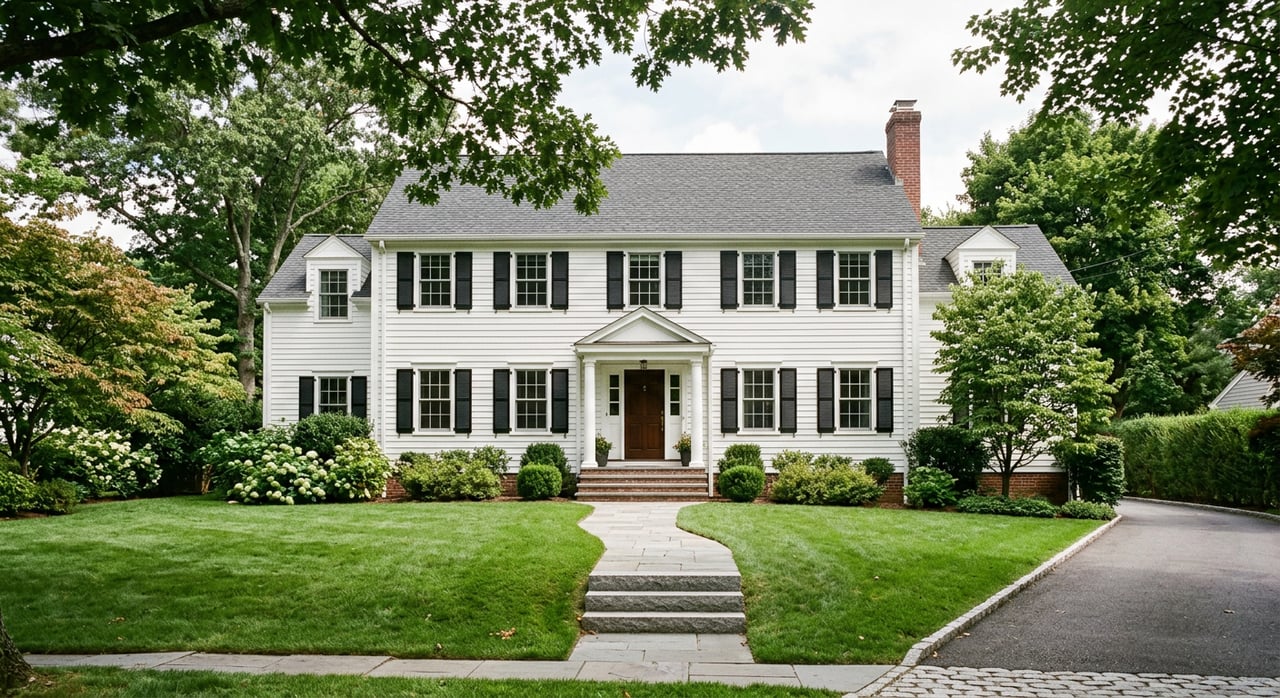
Westwood: Predominantly detached single-family homes. Common styles include Colonials and post-war houses with steady waves of renovations and new construction in desirable areas. Larger parcels support outdoor living and expansion, subject to setbacks and coverage rules in the zoning table (Westwood zoning reference).
Norwood: Many mid-20th-century single-family houses alongside earlier wood-frame homes near downtown, with infill and some townhome developments closer to rail. Smaller lots and a defined center mean a higher chance of walkable locations in certain neighborhoods.
Dedham: An older village core with compact lots and a ring of mixed suburban housing outside the center. Increased townhouse and condo product appears near transit and commercial areas guided by overlay districts.
Needham: A blend of early 20th-century homes, widespread mid-century ranches and splits, and higher-end new construction. Larger lots are common in many single-residence areas, while multi-family pockets cluster near stations and the center.
Commute tradeoffs and micro-markets
Rail access and highway proximity often decide whether you will trade lot size for convenience. Westwood has the Islington station on the Franklin Line, plus the Route 128 park-and-ride station nearby, which together make both rail and drive-then-rail commutes straightforward (Islington station overview). The Route 128 area also sits right on I-95/Route 128, so car commuting is simple, though it follows typical peak congestion patterns (Boston MPO context).
Norwood features multiple Franklin Line stops, including Norwood Depot and Norwood Central, which carve out walkable housing pockets around each station. If you want a shorter walk-to-train setup with a modest lot, these areas are prime search zones (Norwood Depot station).
Dedham is served by Endicott and Dedham Corporate Center stations, with the corporate center acting as a significant park-and-ride and office node. That arrangement supports two distinct buyer profiles: village-focused residents near Endicott and those who prefer quick parking and highway access near Dedham Corporate Center (Boston MPO summary).
Needham’s Needham Line offers multiple stops, including Heights, Center, Junction, and Hersey. These stations create several walk-to-rail micro-markets scattered around town. If train access is essential, target a 0.5 to 1.0 mile radius around those stops for more compact lots and condo or townhome options (Needham Line overview).
Renovation and expansion potential
If you plan to add a second story, a detached garage, or a studio, lot size and coverage rules matter. Westwood’s larger-lot districts and defined coverage limits often leave more room to work within setbacks, which can make expansion more feasible than on very compact village lots. Always confirm setbacks, coverage, and height in the current municipal tables before committing to a plan (Westwood dimensional standards).
In Norwood and Dedham, smaller lots near the center can constrain additions even when local rules technically permit them. Where overlays enable multi-family, your focus may shift to interior renovation and energy upgrades rather than outward expansion. In Needham, many single-residence neighborhoods support significant renovation, while multi-family clusters will have different standards that you should review in town planning documents (Needham planning archive).
Budget and competition snapshot
From a high-level market view, Westwood and Needham typically trade at higher median prices than Norwood and most Dedham neighborhoods. Inventory can be tight in Westwood and Needham, with competition for well-located single-family homes. Norwood often offers more attainable entry or bridge options, and Dedham’s pricing varies widely by neighborhood and housing type. Medians change month to month, so you should compare current, neighborhood-level data when you are ready to tour.
How to choose: a simple decision framework
Use this quick framework to align your wish list with each town’s housing stock:
- If you want a larger yard and a detached single-family feel, put Westwood high on your list and include Needham neighborhoods outside the rail nodes.
- If you want a shorter walk to rail and a more modest lot, target Norwood’s and Dedham’s station areas and village blocks.
- If you prefer park-and-ride convenience, focus on Westwood near Route 128 and Dedham Corporate Center.
- If you plan a major addition, check setbacks and coverage on a few candidate parcels in Westwood or Needham to gauge feasibility.
- If you want condo or townhouse options, look to Dedham’s overlay areas and walk-to-rail nodes in Norwood and Needham.
Practical next steps:
- Map a 0.5 to 1.0 mile radius around the stations that match your commute plan to see where smaller-lot and multi-family choices cluster (Islington station, Norwood Depot, Needham Line).
- Pull the relevant zoning tables for your top town to confirm minimum lot area, setbacks, and coverage before you fall in love with a house that will not support your plans (Westwood dimensional table, Norwood zoning code, Dedham zoning, Needham planning archive).
- Compare recent neighborhood-level sales for your target house type and lot size rather than relying only on townwide medians.
If you want a clear, data-grounded path from wish list to closing, talk with an attorney-led buyer team that treats your purchase like the high-stakes decision it is. Schedule a free consultation with Capital Realty Group to map your options and move forward with confidence.
FAQs
How do Westwood lot sizes compare to Norwood for single-family homes?
- Westwood’s zoning sets larger minimum lot areas in many districts, including 12,000, 20,000, and 40,000 square feet, with some estate districts up to 80,000 square feet, while Norwood’s General Residence district often allows 10,000 square foot lots, leading to more compact parcels overall (Westwood zoning, Norwood zoning).
Which towns offer the most walk-to-rail neighborhoods near Route 128?
- Norwood and Needham have multiple stations that create several walk-to-rail pockets, Dedham has Endicott and Dedham Corporate Center that serve different commuter needs, and Westwood offers Islington plus the Route 128 park-and-ride for flexible car-and-rail commutes (Norwood Depot, Needham Line, Boston MPO, Islington station).
Where are condos and townhomes more common among these four towns?
- You will find more multi-family and townhouse opportunities in overlay or village-center areas in Dedham and Norwood, and in multi-family nodes near transit and the center in Needham, while Westwood remains more heavily single-family by zoning in many districts (Dedham overlay districts, Norwood zoning, Needham planning archive, Westwood zoning).
If I plan a major addition or detached garage, which towns are more likely to fit my plan?
- Larger-lot districts in Westwood and many single-residence areas in Needham can offer more room to work within setbacks and coverage, while compact village lots in parts of Dedham and Norwood may be tighter; always confirm current dimensional standards with the town’s zoning documents before designing a project (Westwood dimensional standards, Needham planning archive).
Are home prices generally higher in Westwood and Needham than in Dedham or Norwood?
- Recent market snapshots indicate Westwood and Needham typically sit in higher price brackets, while Norwood often offers more attainable options and Dedham varies by neighborhood and housing type; verify current medians and neighborhood comps when you are ready to tour.